
What Is Spinal Flow?
Sometimes our bodies feel tight, stressed, or stuck — like a river that has stones blocking the water. These “stones” can be things like old stress, tension, or emotional weight that stop your body from feeling its best.
Spinal Flow® gently helps remove those stones. By working with specific points along the spine, it clears the blockages so your body’s energy can flow like a smooth, running river again.
We’ve seen people experience real changes: less pain, better sleep, easier movement, and a deeper feeling of calm. Many clients report feeling lighter and more relaxed after just one session, and even greater improvement over multiple visits.
When the flow is restored, the body relaxes, posture improves, pain eases, and you feel lighter, calmer, and more balanced — just like a river that runs clean and free.
Spinal Flow® was created by Dr. Carli Axford, an experienced chiropractor who spent over 25 years studying the body’s healing ability. Through her work with thousands of patients, she observed that when the nervous system is supported and stress blockages are released, the body consistently moves toward healing. Her approach is gentle, respectful of the body, and focused on activating the natural intelligence within to restore ease, alignment, and wellbeing.
At Energized Forever, each of our practitioners has been personally trained in the Spinal Flow® Technique by Dr. Carli herself. This means every session you receive follows the same gentle, proven approach she developed. You’re in the hands of someone who understands the technique deeply, applies it correctly, and is fully committed to helping your body heal and find balance.
The Science
The Spinal Flow® Technique (SFT) is backed by principles from neuroscience and chiropractic philosophy, primarily focusing on the relationship between the spine, the nervous system, and the body's stress response.
Here is an overview of the scientific concepts that inform the technique:
1. Nervous System Regulation (Fight-or-Flight to Rest-and-Digest)
The core goal of SFT is to help shift the body from a sympathetic state to a parasympathetic state.
• Sympathetic Nervous System (SNS): Often called the "fight-or-flight" system. Prolonged stress (physical, chemical, or emotional) keeps the SNS active, which can lead to high blood pressure, muscle tension, anxiety, and digestive issues.
• Parasympathetic Nervous System (PNS): Known as the "rest-and-digest" system. When activated, the body relaxes, repairs, digests food, and heals.
• SFT Mechanism: By applying gentle touch to specific access points on the spine and cranium (head/tailbone), the technique is intended to stimulate the nervous system. This subtle input is believed to encourage the body to switch out of the survival mode (SNS) and activate the PNS, promoting a state of calm and allowing the body's innate healing mechanisms to take over.
2. The Role of the Vagus Nerve
The Vagus nerve is a critical component of the PNS, extending from the brainstem to the abdomen and regulating many involuntary functions like heart rate, digestion, and breathing.
• Vagal Tone: A measure of how quickly the Vagus nerve can regulate the heart rate, indicating the body's resilience to stress. Higher vagal tone is associated with better mental and physical health.
• Spinal Connection: Chiropractic research suggests that correcting spinal misalignments, especially in the upper neck (cervical region), can reduce pressure or interference with nerve signaling, which may positively impact Vagus nerve function and increase vagal tone. The gentle touches of SFT aim for a similar outcome—reducing nervous system interference to improve the body's internal communication.
3. The 33 Access Points and Dura Mater
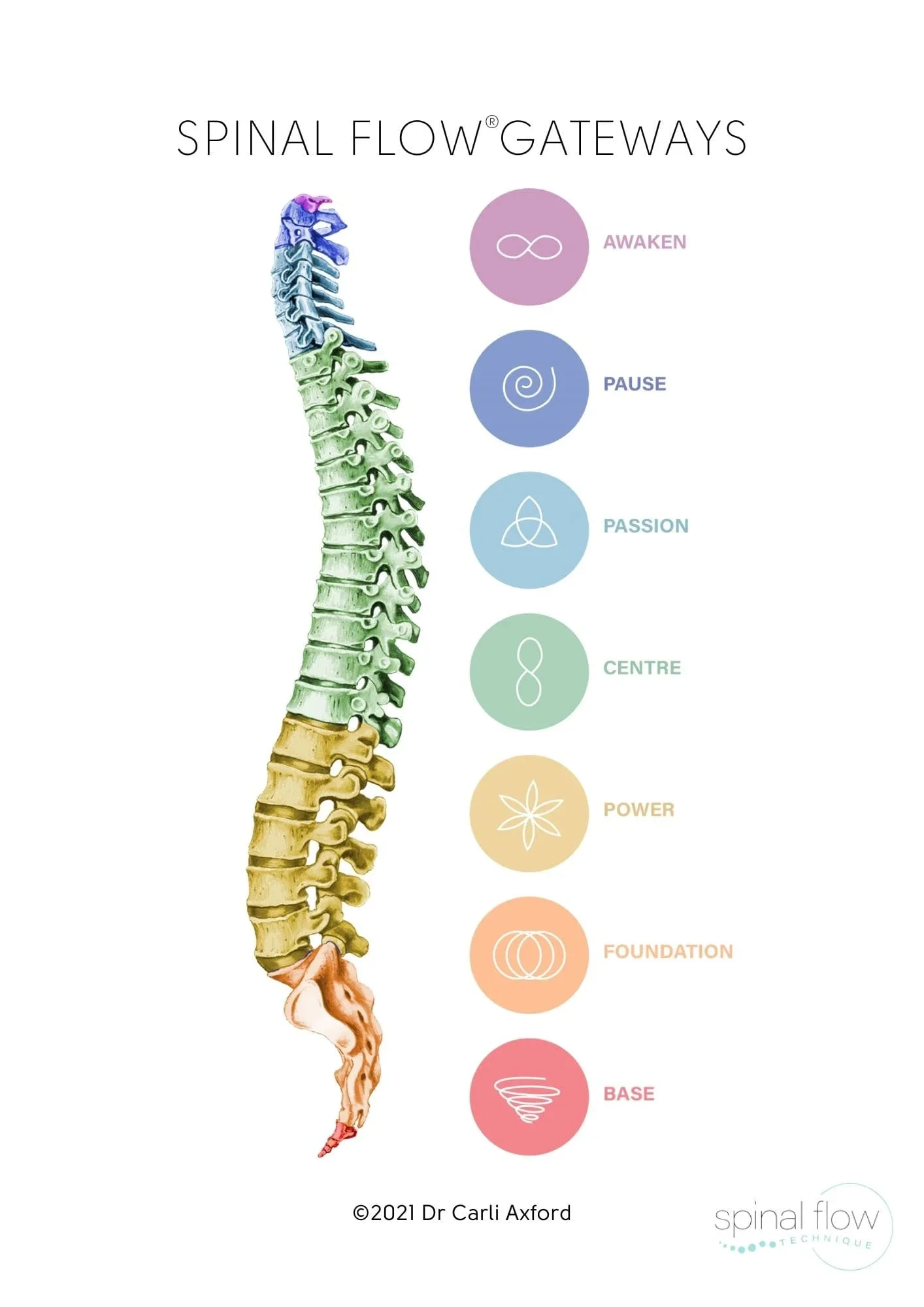
The technique focuses on 33 specific access points along the spine, sacrum, and cranium (skull).
• Dura Mater: This is the tough, outermost membrane that encases the brain and spinal cord, effectively holding the central nervous system. The access points are located where the dura mater is closest to the surface, particularly near the tailbone and skull.
• Energy Flow/Spinal Wave: SFT posits that gentle contact at these points helps release blockages—which are essentially stored physical, chemical, and emotional stress—that interfere with the natural flow of the nervous system's intelligence or energy (sometimes referred to as the "Spinal Wave"). Activating these points sends signals to the brain, which may help release the stored tension pattern along the spine.
4. Connection to Trauma and Stress Storage
The scientific concepts acknowledge that the body stores stress and trauma, not just in the mind but also as physical tension in tissues, muscles, and postural patterns. SFT aims to release these stored patterns at a neurological level, allowing the body to "unwind" chronic tension that has built up over time.
In summary, the Spinal Flow Technique is an evolution of chiropractic and bodywork that uses light touch to leverage the mind-body connection through the nervous system, specifically aiming to improve its communication pathways and reduce the impact of chronic stress.
FAQs
What does a Spinal Flow session feel like?
Most people feel calm, relaxed, and peaceful during the session. Some feel warmth, tingling, or gentle energy moving through their body.
How many sessions will I need?
Every body is different, but many people notice changes after just 1–3 sessions. For deeper or long-term issues, a series of sessions creates the best results.
Is Spinal Flow safe for children and older adults?
Yes, it is gentle enough for all ages — babies, children, adults, seniors — even those who are sensitive, fragile, or in pain.
Is Spinal Flow painful?
No. The method is gentle and non-invasive. There’s no cracking or forceful manipulation.
Can Spinal Flow help with stress or emotional tension?
Yes. The nervous system holds emotional stress as well as physical stress. Many clients report feeling lighter, clearer, and more emotionally balanced after sessions.
What happens after a session?
You may feel relaxed, energized, calm, or even emotional release. Some people experience changes over hours or days as the body continues to unwind and reset.
How is Spinal Flow different from chiropractic?
Chiropractic works by adjusting bones. Spinal Flow works by guiding the nervous system to release stress, tension, and stored blockages. It helps the body heal from within.
Do I need to remove clothing during the session?
No. You stay fully clothed. We only ask that you wear something comfortable so you can relax easily.
How does Spinal Flow support healing?
By clearing blockages in the nervous system, it helps the body return to its natural state of balance — improving circulation, alignment, mobility, and overall wellbeing.